

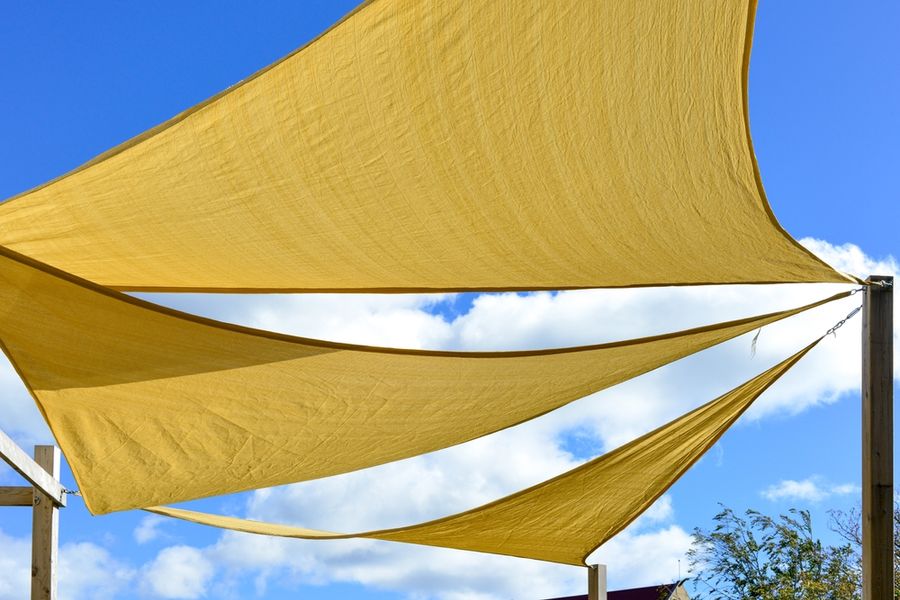
A hot backyard can make even a nice patio feel hard to use. Shade sails are one way to turn a sunny seating area into a place where people can sit, eat, and talk with less direct sun. They can also add a clean, modern look without building a full roof. Still, they are not perfect for every yard. Before adding one, it helps to weigh comfort, safety, care, and long-term use.
Pro: Shade Sails Can Improve Comfort
The main benefit of a shade sail is simple: it blocks part of the sun from reaching the seating area. Shade can lower heat gain on outdoor surfaces, and shaded areas often feel easier to use during warm parts of the day.
This can matter most over patios, decks, and paved spaces because hard surfaces can hold heat. A sail placed over chairs, a table, or an outdoor sofa can make the space more useful for meals, reading, or short breaks during summer afternoons.
Con: Sun Protection Is Helpful, But Not Complete
Shade can reduce direct sun exposure, and public health guidance often includes shade as one part of safer outdoor time. A sail can also make it easier for people to stay in one protected spot instead of moving chairs around the yard.
However, shade should not be treated as full sun protection. UV rays can still reach people on cloudy days, and some rays can reflect from surfaces such as water, cement, and sand. Shade from canopies and umbrellas is useful, but it does not remove the need for other protection when UV levels are high.
Pro: Design Flexibility
Shade sails come in shapes that can be angled over small or large seating areas. This makes them useful in yards where a full pergola or covered porch would feel too heavy. A sail can cover a dining table, a fire pit area used in daylight, or a corner lounge without closing in the whole yard.
The design still needs careful planning. Moving shade changes during the day, so the best location depends on where the sun hits the yard in the morning, midday, and late afternoon. Planning the size, shape, and position of shade is important because shadows move as the sun moves.
Con: Installation Can Be A Real Challenge
A shade sail is not just a piece of fabric tied to the nearest fence. It needs strong connection points, proper tension, and support that can handle pulling force. Shade cloth guidance stresses the need for quality support materials, secure attachment, proper anchoring, and careful tensioning.
This is where many do-it-yourself projects can go wrong. If the sail is loose, it can flap, rub, and wear faster. If the posts or fasteners are weak, wind can turn the sail into a safety problem. Strong wind can damage poles, tear cloth, or harm suspension wires when a shade structure is not properly designed and installed.
Con: Wind, Storms, And Local Rules Matter
A backyard shade sail should be planned with local weather in mind because the sail, posts, and footings need to match the size of the fabric and the expected wind load. In windy areas, professional help may be wise because a shade sail is held under tension, and weak posts or loose hardware can make the whole setup unsafe.
Local rules can also affect the project. Before installing a shade sail, homeowners should check local building rules because some installations may need permits, especially when posts, engineered plans, or strong structural attachment points are involved. It is also smart to check any homeowners association rules before adding visible posts, hardware, or fabric over a patio.
Pro: Maintenance Is Usually Simple, But Still Needed
Shade sails can look low-maintenance, but they still need regular checks. The fabric, corners, posts, and hardware should be inspected for wear, loose fittings, sagging, or damage, and the sail may need to be re-tensioned from time to time.
Cleaning needs depend on the yard. Trees, pollen, dust, birds, and storms can leave dirt on the fabric, so the sail should be cleaned gently when needed and allowed to dry before storage. A sail that is ignored may sag, stain, or wear sooner than expected, so it should be treated as part of the outdoor space rather than a one-time install.
When A Shade Sail Makes Sense
A shade sail works best when the seating area needs shade but not a solid roof. It can be a good fit for a patio, pool area, deck, or outdoor living space where the goal is to create a cooler and more comfortable place to sit.
It may not be the best choice for homeowners who want full rain cover, a four-season roof, or a structure with almost no upkeep. Many standard shade sails are made mainly for sun shade rather than rain protection, and some should be removed during winter or severe weather.
Balance Comfort With Care
Shade sails can make a backyard seating area cooler, more inviting, and more flexible. Their biggest strengths are comfort, design freedom, and relief from direct sun. Their biggest drawbacks are wind concerns, installation needs, local rule checks, and ongoing care.
For many U.S. homeowners, the best choice is a well-planned sail over a clearly defined seating area. When the anchors are strong, the shade path is planned, and the fabric is checked over time, a shade sail can turn a hot patio into a more pleasant place to spend the day.