

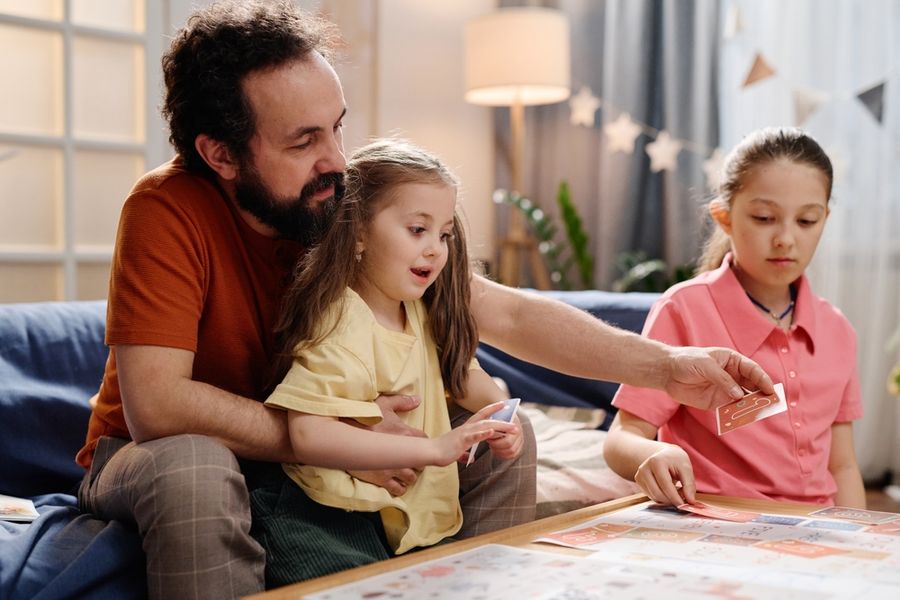
Screen time is at an all-time high in most American households, but there's a simple, screen-free way to bring the family back together: a great board game. Unlike competitive games that can end in arguments and hurt feelings, cooperative games ask everyone at the table to work toward the same goal. They spark real conversation, build trust, and create memories that last long after the pieces go back in the box.
Why Cooperative Games Are Good for Families
Sitting down for a board game does more than just pass the time. Research has found that both competitive and cooperative board games help build prosocial behaviors in children, such as sharing and helping others. When the whole family gathers around the table, the game gives everyone a reason to talk, listen, and think together.
Cooperative games in particular pull players away from individual screens and into a shared space where real communication has to happen. Unlike scrolling through a phone alone, playing a game requires eye contact, active listening, and responding to what others are saying. These small moments, repeated over many game nights, add up to stronger family bonds over time.
Pandemic: A Classic That Asks Everything of Your Team
Pandemic is one of the most beloved cooperative board games available today. Players each take on a special role — such as a Medic, Scientist, or Dispatcher — and work together to stop four dangerous diseases from spreading around the world. With three different ways to lose and only one way to win, the tension never lets up.
What makes Pandemic work so well for families is that it creates a natural space for honest communication. Players share cards, discuss strategy, and have to make decisions together on every single turn. Because the goal belongs to everyone at the table, there's no reason to hold anything back.
Codenames: Word Play That Opens Up New Conversations
Codenames is a team-based word game where one player acts as the "Spymaster" and gives a single-word clue to help teammates identify the right words from a grid. It sounds straightforward, but coming up with the perfect clue — one that links multiple words without accidentally pointing to the wrong one — is a real mental workout.
Beyond being a lively party game, Codenames is genuinely educational. It builds vocabulary, critical thinking, and deductive reasoning in players of all ages. It works especially well across generations, because older players have to think carefully about how a younger child might interpret a clue — which itself opens up great conversation. Families tend to keep coming back to this one because no two games ever feel quite the same.
The Forbidden Series: Adventure for All Ages
Forbidden Island and Forbidden Desert are two cooperative games designed by Matt Leacock, the same creator behind Pandemic. In Forbidden Island, players race to collect four treasures from an island that is slowly sinking into the sea. The rules are easy to pick up and the game is a great first step for families who are new to cooperative play.
Forbidden Desert raises the stakes. Players are stranded in a desert sandstorm and must locate the parts of a buried flying machine before the heat or the sand claims them. Once a family knows the rules, games move along quickly, making it a solid choice when time is short. Both games reward open, ongoing communication and work well with players across a wide range of ages.
Make Every Game Night Count
The best board games are the ones that get people talking. Whether your family is racing to cure diseases in Pandemic, debating Codenames clues, or barely surviving a desert storm together, these games create shared moments that bring people closer. The laughter, the disagreements, the close calls — that's where the real value lives.
You don't need a special occasion to make this happen. A regular game night, even once a week, gives the whole family a dedicated time to connect, solve problems together, and just enjoy each other's company. With so many great cooperative games on shelves today, putting down the phones and picking up the dice has never been a better idea.